
Warm Turkey PCB and Electrical Design
I managed PCB design timelines and goals, organizing our electrical development to ensure a working product for our E-days. While I focused on other tasks, the more complex PCB design was done by my incredible teammates
Iteration 1
Our first electrical iterations did not involve PCBs. The very first iterations involved breadboards to test our electrical schematics
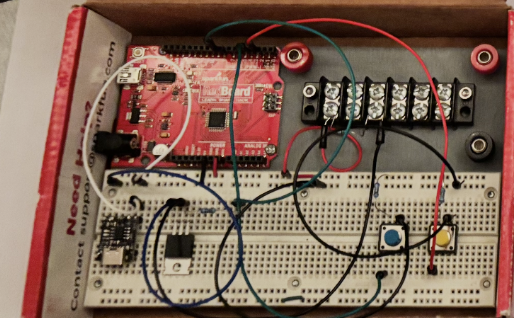
Iteration 1 Result
This design allowed us to validate our electronics before we committed to protoboard soldering
Iteration 2
Iteration 2 involved a mix of protoboards and direct soldering for our first enclosed electrical system. Our connection to the pod was down by directly soldering to machined brass pins
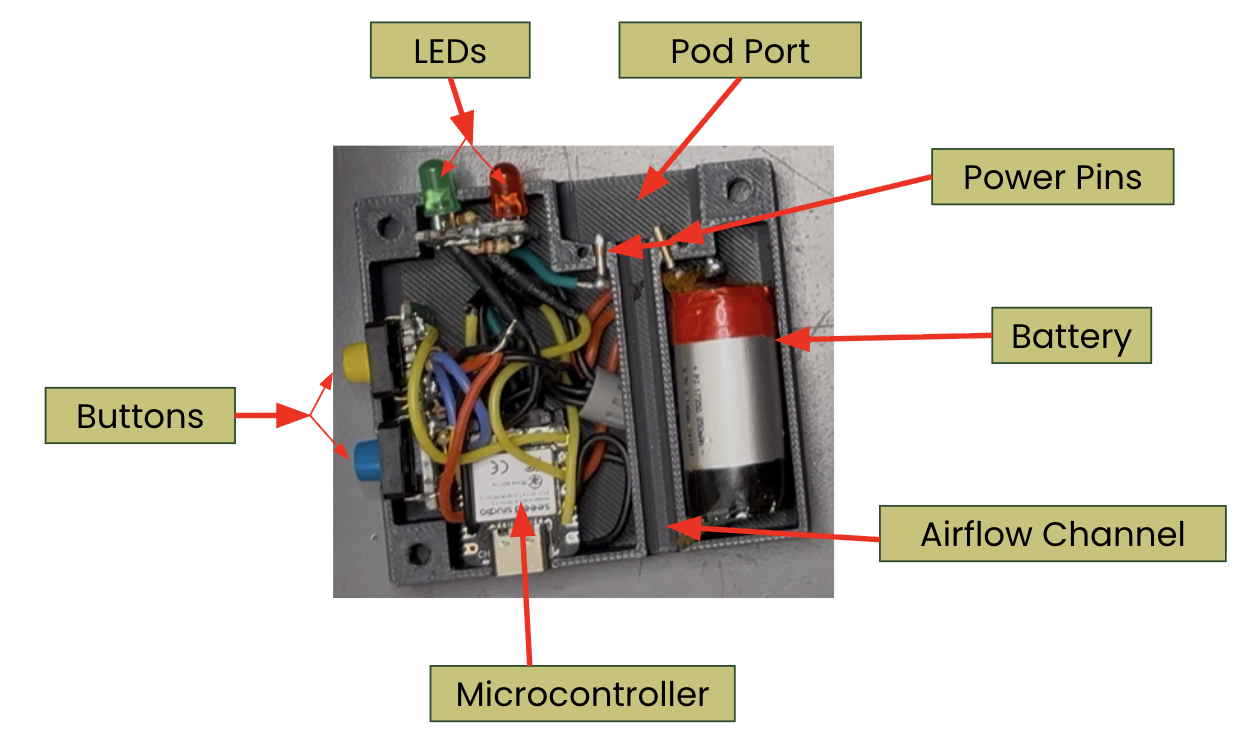
Iteration 2 Result
This design had a long assembly time and frequent failures. It suffered regular shorts, and without a spring contact to the pods often failed to provide power
Iteration 3
Similar to iteration 2, direct soldering with some protoboards was used in iteration 3 while we waited on PCBs. A screw plate was used to allow for disconnection of the battery without desoldering
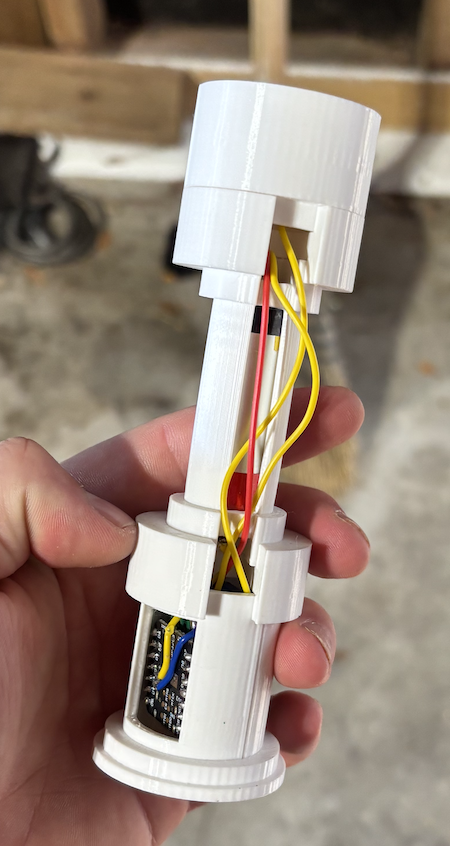
Iteration 3 Result
This design suffered the same issues as iteration 2, though suffered less shorts due to more organized wiring
Iteration 4
Iteration 4 was a set of 2 PCBs. We utilized one PCB to house brass pogo pins to ensure a spring connection to a pod’s electrical contact, replacing the unreliable machined pins. Another PCB housed our electrical components
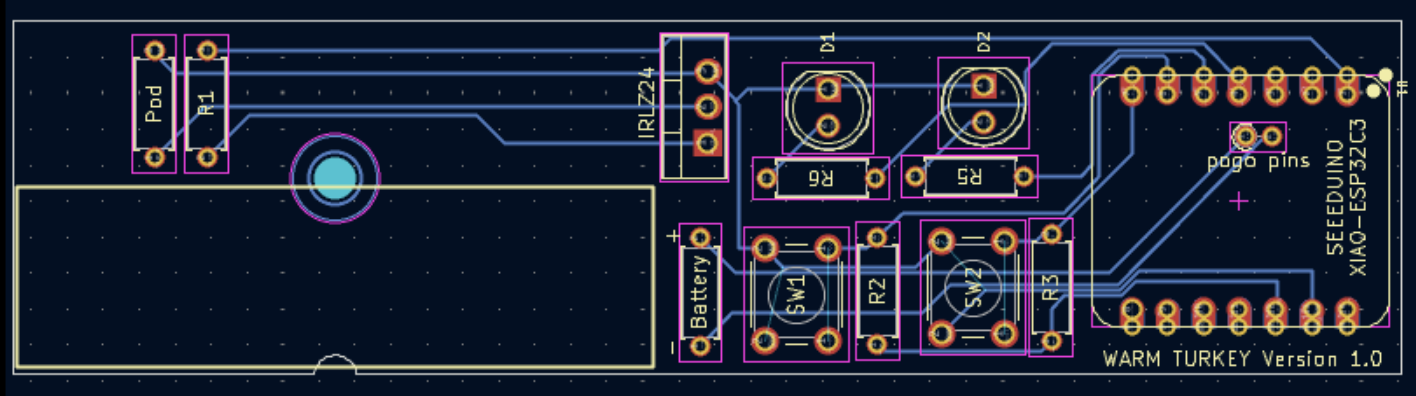
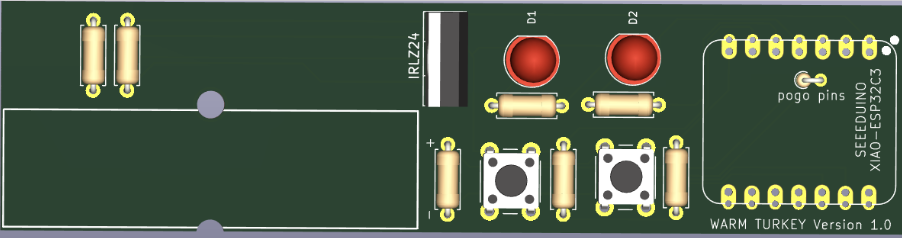
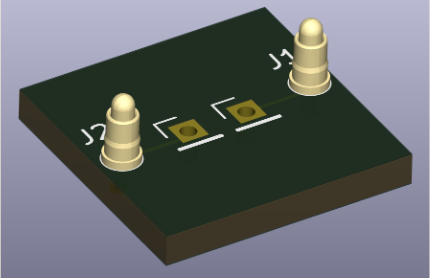
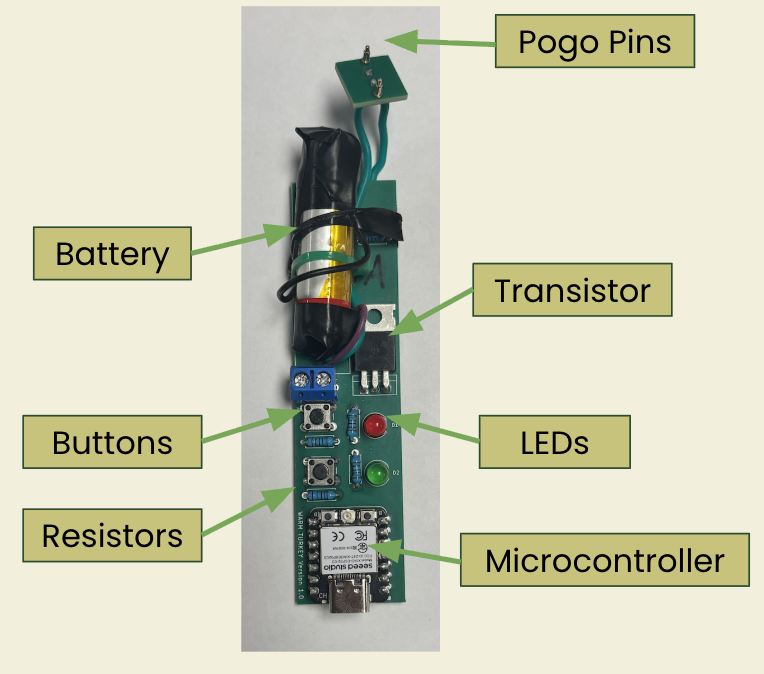
Iteration 4 Result
Iteration 4 worked perfectly, allowing for confidence in our electrical connections. Versions with this PCB performed significantly better in all durability tests we complected
Iteration 5 (Final)
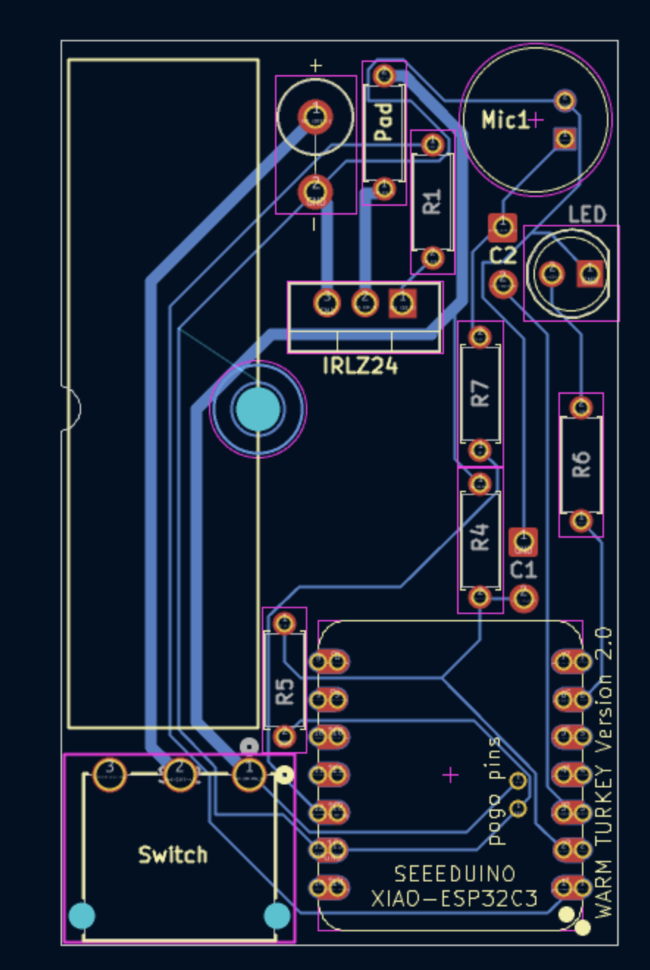
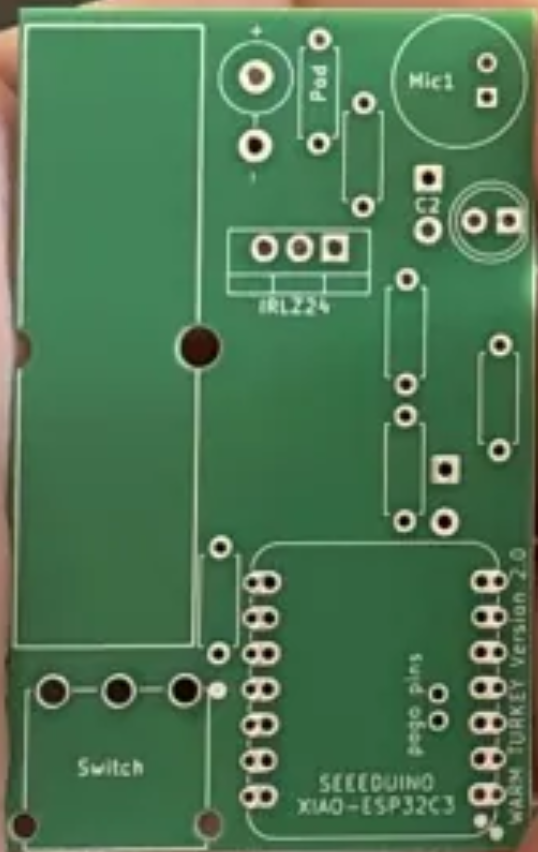
Iteration 5 was a shorter, wider PCB. It featured a power switch and a sensor for breath activated inhalation rather than relying on buttons. Because of this, some componets were able to be removed.
Iteration 5 Result
I do not have photos of the assembled iteration 5 PCB, though once assembled it worked fantastically
Review
Switching to a PCB was the biggest shift in our project. It introduced substantial growth in our reliability and functionality. Through this process, I learned more about wiring schematics, and practiced my development in KiCad, where I am feel confident in my PCB development skills, especially with ESP32 platforms